
☞ Maxis Software Toys
A peek into how the maker of SimCity marketed its products
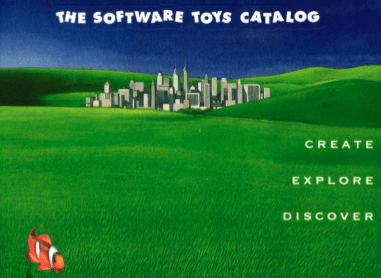
I recently came across catalogs from Maxis—the maker of SimCity and other simulation games—from 1993 and 1994. These catalogs are billed as Software Toys Catalogs and are fascinating looks into what they were offering during this time and how they were thinking about their products. From the Internet Archive:
From 1994:
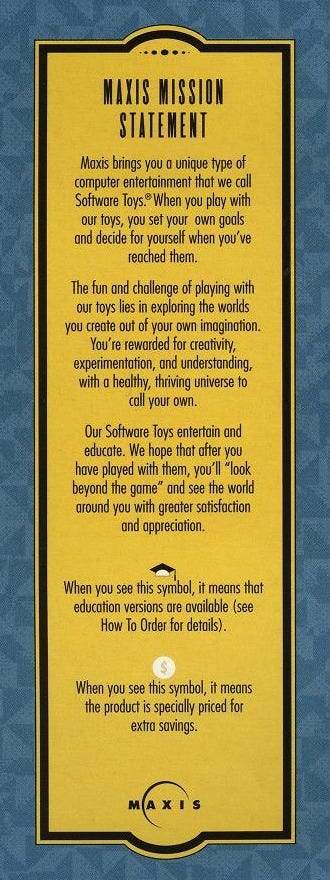
I love this focus on open-ended play: “When you play with our toys, you set your own goals and decide for yourself when you’ve reached them. The fun and challenge of playing with our toys lies in exploring the worlds you create out of your own imagination.”
From the 1993 catalog about SimCity 2000 (which includes a t-shirt!):
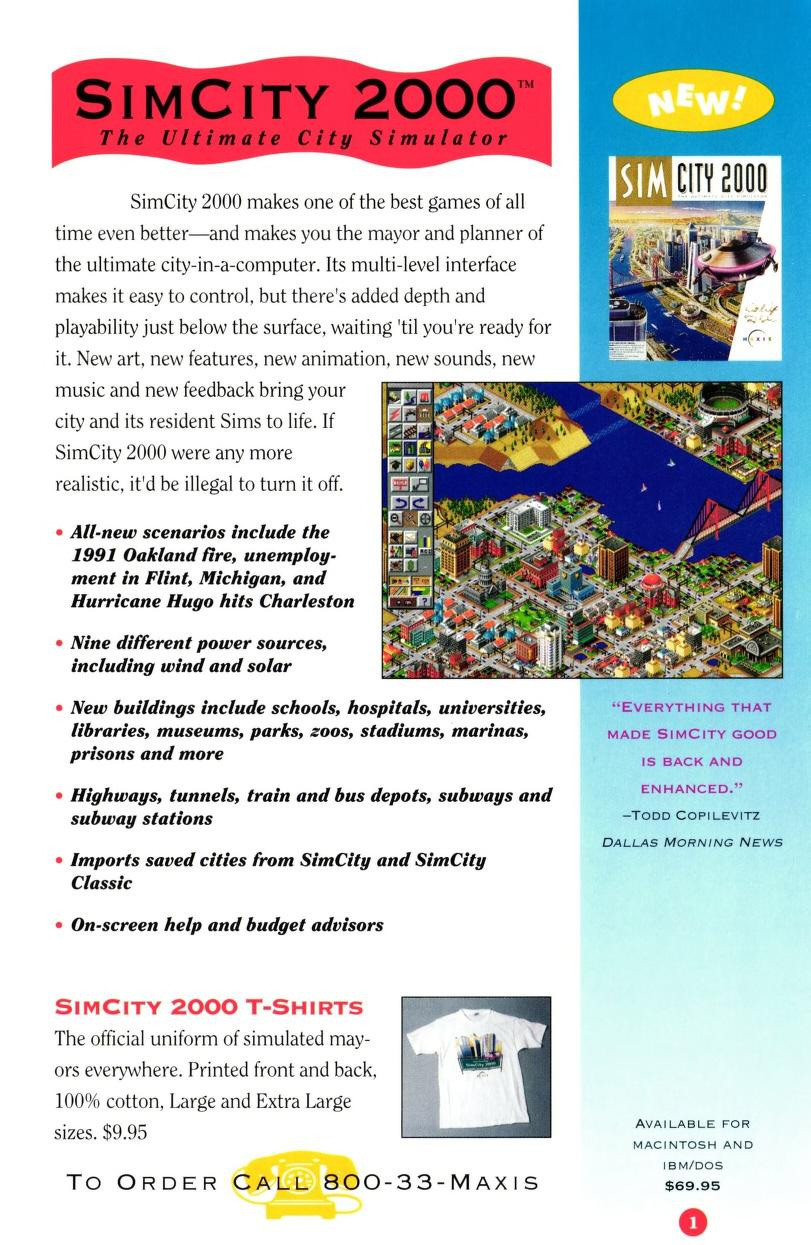
The best line is “If SimCity 2000 were any more realistic, it’d be illegal to turn it off.”
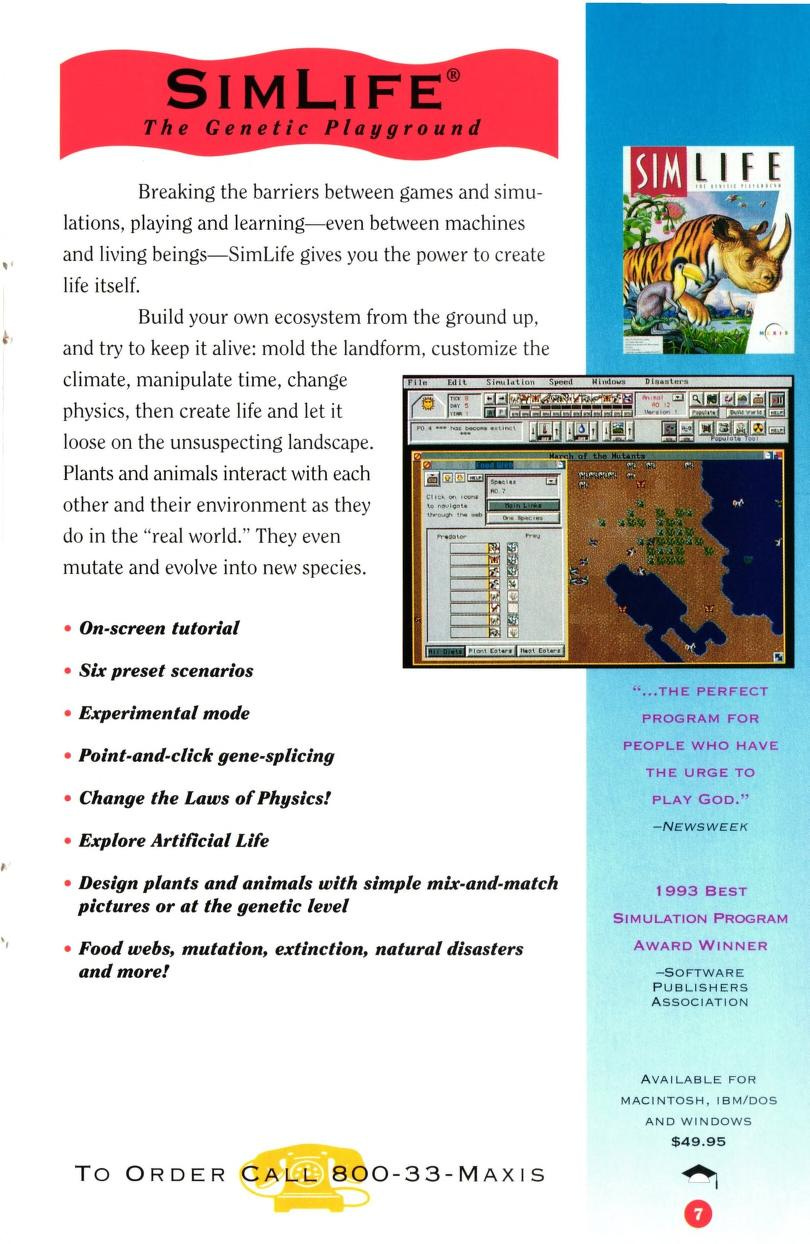
And within the SimLife listing is “mold the landform, customize the climate, manipulate time, change physics, then create life and let it loose on the unsuspecting landscape”:
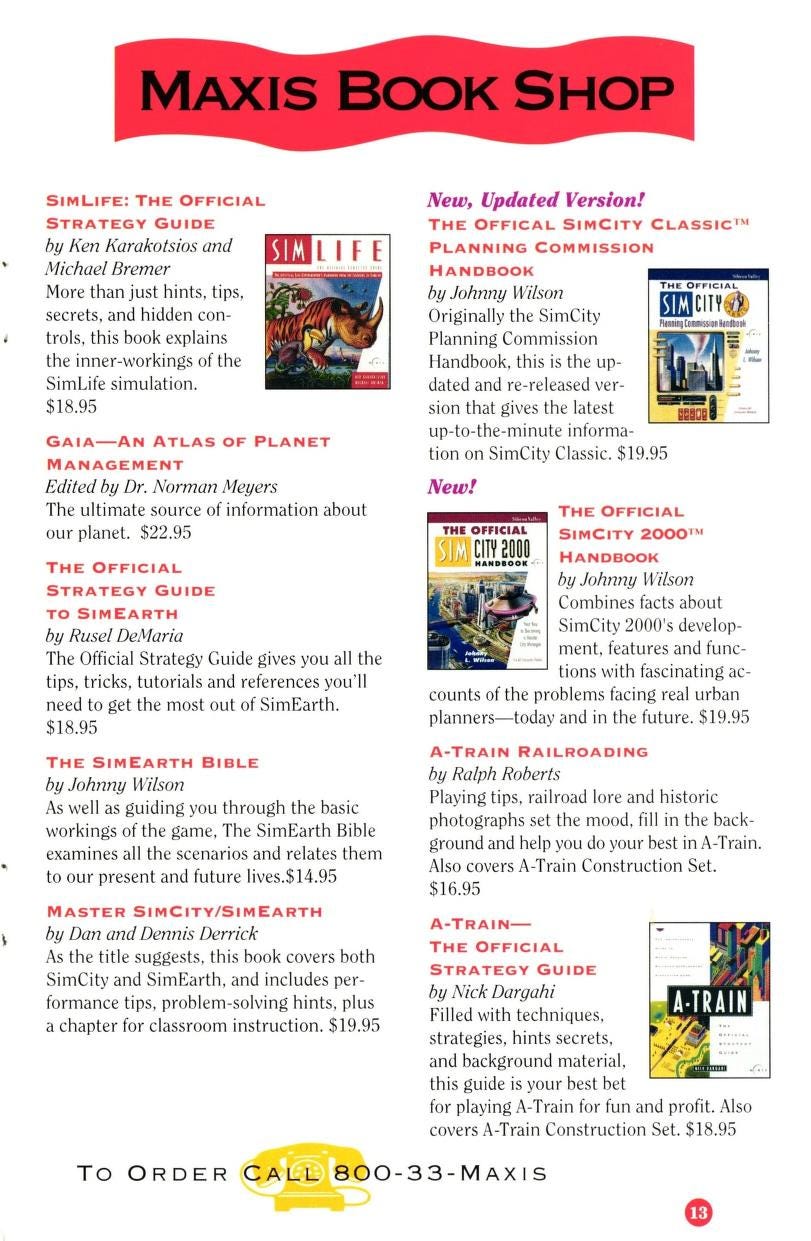
There is even a book shop section in the catalogs, with the 1993 edition including an “atlas of planet management”:
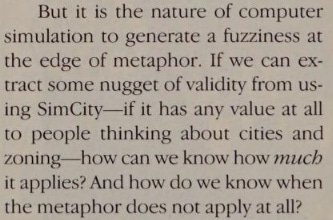
Related to simulations and their verisimilitude—SimCity 2000 being almost illegal to turn off!—the journalist Steven Levy wrote a meditation on the nature of these simulations in Macworld from 1990 that is well worth a read. A tiny sample:
And if you want more vintage Maxis, awhile back I wrote about a Maxis annual report from 1996:
☞ The Wonders of Maxis

As longtime readers know, I am a huge fan of SimCity (example one and two). I grew up playing both the original as well as SimCity 2000, which in my opinion, is one of the best pieces of software ever. And I loved these simulation toys.
Now let’s think more about creating a Maxis 2.0. ■
New Season of The Orthogonal Bet Podcast!
In case you are not a subscriber, we are back with new episodes of The Orthogonal Bet! Watch us on YouTube or listen wherever podcasts are available.
A few new conversations:
The Enchanted Systems Roundup
Here are some links worth checking out that touch on the complex systems of our world (both built and natural):
🜸 How Markdown took over the world: “it reminds us of how the Internet really works: smart people think of good things that are crazy enough that they just might work, and then they give them away, over and over, until they slowly take over the world and make things better for everyone.”
🝤 10 things I learned from burning myself out with AI coding agents: “Opinion: As software power tools, AI agents may make people busier than ever before.”
🜚 You Need A Kitchen Slide Rule
🝳 Isometric NYC: And how it was made.
🝤 The Mythology Of Conscious AI: “Why consciousness is more likely a property of life than of computation and why creating conscious, or even conscious-seeming AI, is a bad idea.”
🜹 Does Anthropic believe its AI is conscious, or is that just what it wants Claude to think? “We have no proof that AI models suffer, but Anthropic acts like they might for training purposes.”
🝊 What It’s Like To Be A Worm: ‘Finding evidence of “sentience” is fraught, whether in a comatose patient, an animal, or a neural net.’
🝤 How did medieval French handwriting become “the Nazi font?”
Until next time.
Speaking of sims, curious what you think of:
>At Simile, we have built the first AI simulation of society, populated by agents based on real humans.
>We are now developing a foundation model that predicts human behavior in any situation, at any scale.
>Today, leading companies use Simile to rehearse earnings calls, model litigation outcomes, and test policy changes. Soon, we envision simulating entire worlds: trillions of interacting decisions across individuals, organizations, cultures, and states.
https://x.com/simile_ai/status/2022011618176237657